News
Simandou 2040: what the national plan holds for minerals
Two hundred billion dollars over fifteen years, five pillars, three phases. A reading of the points that genuinely touch extraction and transport.
Published on
Simandou 2040 is Guinea’s economic emergence programme: $200 billion announced over fifteen years, 122 megaprojects, 36 reforms, fourteen priority sectors.
The plan unfolds in three phases: $65 billion between 2025 and 2030, around the Simandou megaproject; $75 billion from 2030 to 2035 for industrial diversification; $60 billion through to 2040.
The pillar that concerns us
Of the programme’s five pillars, the one covering infrastructure, transport and technology bears directly on our trades. It comes with a principle repeated ever since: resources are to be processed locally rather than leave the country in a raw state.
That did not remain an intention. On 13 June 2026, work began on an alumina refinery at Démougala, in the prefecture of Boffa: 1.2 million tonnes a year, $1.68 billion of investment, carried by Chalco Hong Kong and the Guinean State. The Ministry of Mines presents it as the country’s third alumina refinery since independence.
What a buyer should take from it
A State programme of this scale produces two opposing effects in the short term.
It makes the framework more predictable: when local processing becomes a policy rather than a project-by-project negotiation, a buyer knows what to expect five years out.
It tightens capacity: every construction site draws on ports, roads and crews. Loading windows are contested, and lead times lengthen before they ease.
Our reading
We do not build our commitments on fifteen-year announcements. But a plan that puts local processing at its centre confirms the direction Guinean gold and bauxite are already taking — and it is on that direction that today’s contracts are negotiated.
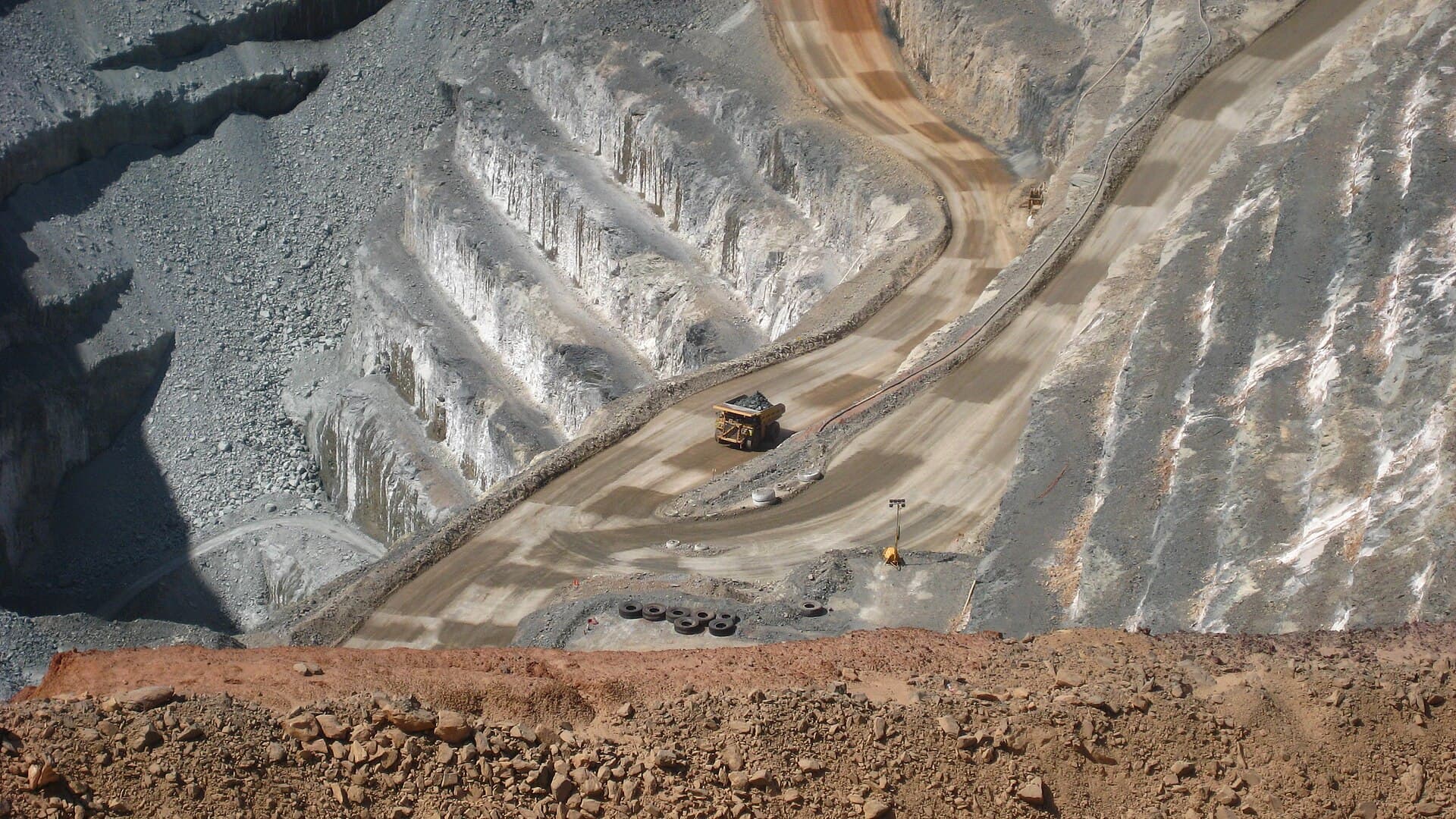
Sources: Simandou 2040, Ministry of Mines and Geology. Photograph: Calistemon, CC BY-SA 4.0.